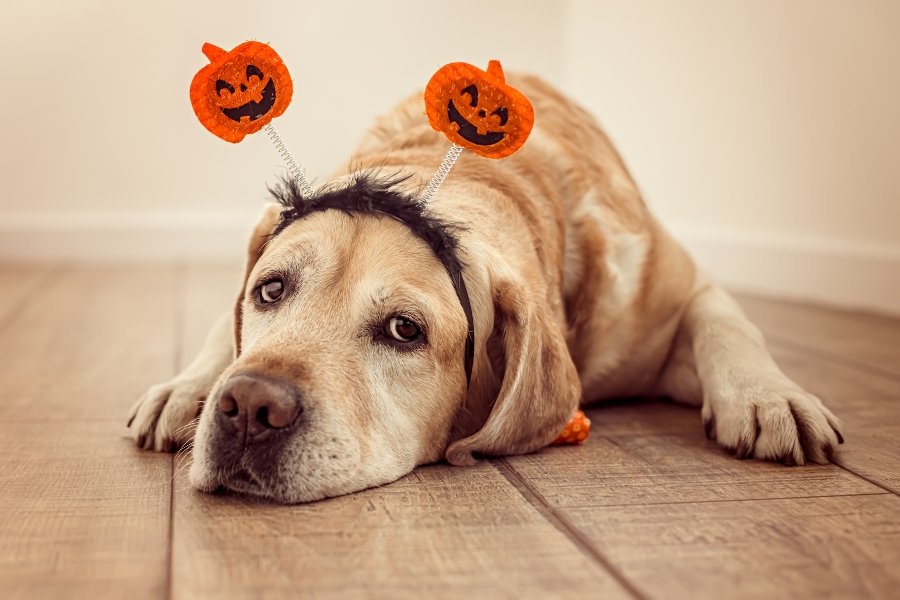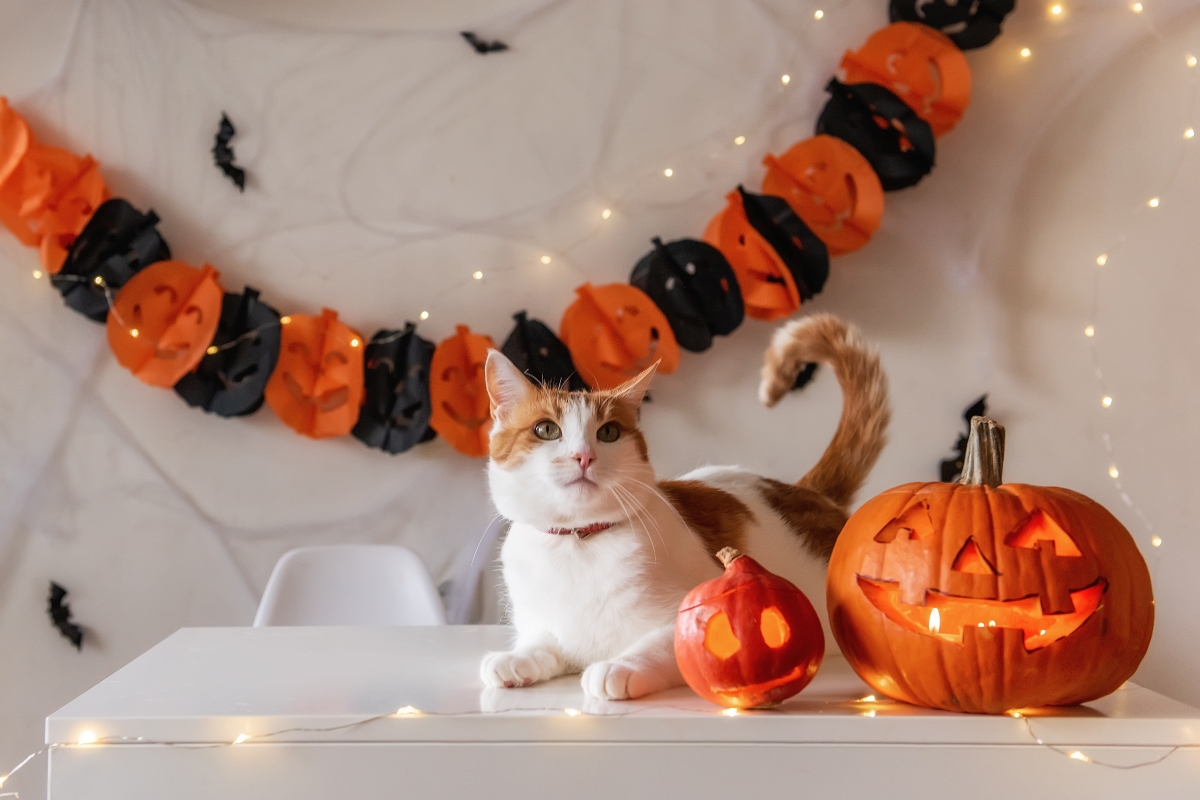
Halloween can turn an ordinary evening at home into several hours of unfamiliar activity. The doorbell rings repeatedly. Costumed visitors appear on the porch. Children talk and shout outside. The front door opens and closes over and over.
For people, this activity is part of the celebration. For a cat, it can be confusing and frightening.
Cats often feel most secure when their environment is familiar and predictable. Halloween can disrupt that sense of security within minutes. Even a normally relaxed cat may hide, avoid food, become restless, or try to escape when unfamiliar people repeatedly approach the home.
Understanding Halloween anxiety in cats can help you prepare before trick-or-treating begins. A few changes around the house may make the event much calmer and safer for your feline companion.
Why Can Halloween Be So Stressful for Cats?
Cats pay close attention to changes in their surroundings. They recognize familiar sounds, smells, people, and daily routines.
Halloween introduces several unusual things at once.
Your cat may encounter:
- Repeated doorbells or knocking
- Frequent opening and closing of the front door
- Unfamiliar voices outside
- Children running or shouting
- Masks and large costumes
- Flashing decorations
- New scents
- Groups of visitors
- Changes to the household’s normal evening routine
A single knock may not bother your cat. Dozens of interruptions over several hours can be very different. Keeping cats away from the busiest areas of the home can reduce both stress and the chance of an accidental escape.
Why Does Constant Door Activity Affect Some Cats So Much?
Think about Halloween from your cat’s perspective. Someone approaches the house. The doorbell suddenly rings. Voices become louder. The door opens, revealing unfamiliar people wearing unusual clothing or masks. The visitors leave, but a few minutes later, everything happens again.
Your cat does not understand why this pattern keeps repeating. Some cats retreat to another room and remain there until the house becomes quiet. Others stay alert because they continue hearing activity near their territory.
Individual responses also vary. A confident, social cat may tolerate visitors better than a shy cat. Older cats, kittens, cats new to the household, and cats already sensitive to noise or environmental changes may need additional support.
What Are the Signs of Halloween Anxiety in a Cat?
Cats do not always show fear in obvious ways. Hiding is common, but it is not the only possible response.
Watch for changes such as:
- Hiding under furniture or in closets
- Crouching or freezing
- Flattened ears
- Dilated pupils
- A tucked or rapidly moving tail
- Avoiding family members
- Increased vocalization
- Pacing or restlessness
- Refusing treats or meals
- Trying to escape
- Swatting, scratching, or hissing
- Excessive grooming
- Changes in litter box habits
Pay attention to what is unusual for your individual cat. A normally social cat suddenly refusing to leave a bedroom may be communicating discomfort even without vocalizing.
Some of these changes can also occur with medical problems. Do not automatically assume an unusual behavior is caused by Halloween, especially if it continues after the activity ends.
Create a Quiet Room Before Trick-or-Treaters Arrive
One of the simplest ways to reduce Halloween stress is to prepare a quiet area before the evening becomes busy. Choose a room away from the front entrance when possible. Set it up before your cat becomes frightened.
The room should include familiar essentials, such as:
- Fresh water
- A litter box
- Your cat’s normal food
- Comfortable bedding
- A favorite hiding spot
- Familiar toys
- A scratching surface
Some cats feel safer when they can get underneath or inside something. A familiar carrier left open with comfortable bedding may work for some cats. A cardboard box or covered cat bed can also provide a retreat.
The goal is not to force your cat into social interaction. Give your cat a place where they can withdraw from the evening’s activity.
Reduce the Effect of Doorbells and Knocking
The doorbell itself can become one of the biggest problems during trick-or-treating. If your cat reacts strongly to it, consider reducing how often visitors need to ring. A small sign asking trick-or-treaters not to ring the bell can help.
You might also sit outside to distribute candy if your home and circumstances make that practical. This reduces repeated opening of the door and may keep much of the activity outside.
Inside your cat’s quiet room, familiar background sound may help soften noises from elsewhere in the house. Keep the volume moderate rather than trying to drown out every sound.
Keep Your Cat Away From the Front Door
Halloween anxiety is not only a comfort issue. It can become a safety problem.
A frightened cat may react differently than expected. A cat that normally stays several feet away from an open door could suddenly bolt when startled.
Repeatedly opening the entrance for trick-or-treaters creates many opportunities for an escape. Keep your cat securely indoors and separated from the entrance before visitors begin arriving.
It is also worth checking that your cat’s identification information is current. If your cat is microchipped, make sure the associated contact details are up to date.
Do Not Force Your Cat to Meet Costumed Visitors
A social cat may usually walk toward visitors. Halloween guests are different. Large hats, masks, capes, face paint, bulky clothing, and unusual movements can make familiar human shapes look strange. Children may also approach pets quickly because they are excited.
Allow your cat to decide whether they want interaction. If your cat retreats, do not pull them from their hiding place to meet guests. A hiding cat has chosen a strategy that makes them feel safer. Giving your cat control over distance can be more helpful than trying to convince them that nothing is wrong.
Keep the Evening Routine as Normal as Possible
Halloween may be unusual, but your cat’s entire day does not have to change.
Try to maintain the normal schedule for:
- Meals
- Play
- Medication
- Litter box cleaning
- Quiet time
- Bedtime
Consider playing with your cat earlier in the day, before neighborhood activity increases. Use whatever type of play your cat already enjoys rather than introducing something unfamiliar on Halloween night.
Once trick-or-treating ends, allow the house to gradually return to its normal rhythm.
Be Careful With Halloween Decorations Around an Anxious Cat
Stress is not the only Halloween concern inside the home. A nervous cat may run, jump, or hide somewhere they normally avoid. That makes safe decorating especially important.
Keep your cat away from open flames, electrical cords, easily swallowed decorations, and anything that could fall if bumped. Battery-operated lights can be a safer alternative to candles inside jack-o’-lanterns.
Candy should also remain inaccessible. Chocolate and certain other ingredients in human treats can be dangerous for pets. Candy wrappers and other small objects can also cause problems if chewed or swallowed.
When Is Halloween Anxiety More Than Temporary Stress?
A cat hiding during the busiest part of Halloween night may return to normal once visitors stop arriving. Persistent or severe behavioral changes deserve more attention.
Contact a vet if your cat continues behaving unusually or develops concerning signs such as:
- Refusing food
- Repeated vomiting or diarrhea
- Extreme lethargy
- Difficulty breathing
- Persistent hiding
- Sudden aggression
- Signs of pain or discomfort
- Repeated litter box visits
- Straining to urinate
- Producing little or no urine
Urinary changes are especially important. Stress can contribute to urinary problems in some cats. However, difficulty passing urine can also indicate a serious medical problem. A cat that repeatedly tries to urinate but produces little or no urine needs prompt veterinary attention.
Loss of appetite should not automatically be dismissed as nervousness either. If your cat continues refusing food or develops other symptoms, veterinary evaluation may be necessary.
Should You Talk to a Veterinarian Before Halloween?
If your cat has a history of severe fear during visitors, parties, thunderstorms, travel, or previous holidays, planning ahead can be useful. A reliable veterinarian in Asheville can help determine whether the behavior appears related to situational anxiety or whether a health problem could be contributing to the change.
For cats with significant anxiety, recommendations depend on the individual animal. The vet may discuss environmental changes, behavioral strategies, or medication when medically appropriate. Never give your cat human anxiety medication or medication prescribed for another pet. Medication choices and doses should be determined for the individual cat.
A Calmer Halloween Starts With Preparation
Your cat does not need to participate in every part of Halloween. For many cats, the safest celebration is a quiet evening away from the front door.
Prepare their room before visitors arrive. Keep familiar resources nearby. Reduce unnecessary doorbell activity. Prevent access to the entrance. Let your cat hide if they choose, and watch for behavioral or physical changes that continue after the neighborhood becomes quiet.
If your cat struggles with significant anxiety, stops eating, develops unusual litter box behavior, or simply does not seem like themselves, our trusted veterinarian in Asheville at Haw Creek Animal Hospital is here to help. We take the time to understand what your pet is experiencing and determine appropriate next steps for their health, comfort, and well-being.
Frequently Asked Questions
Q1. Why does my cat hide every time the doorbell rings?
Ans. The sudden sound of a doorbell can startle a cat, especially when it is followed by unfamiliar voices and people approaching the home. On Halloween, repeated ringing may keep a sensitive cat alert for an extended period. Providing access to a quiet room away from the entrance can help reduce exposure to the activity.
Q2. Should I keep my cat in a separate room on Halloween?
Ans. For many cats, this can be helpful. A secure room away from the front entrance can reduce exposure to doorbells, strangers, costumes, and repeated door opening. It also lowers the chance that your cat could slip outside when you answer the door.
Q3. How long does it take a cat to calm down after Halloween?
Ans. There is no single timeline. Some cats return to normal soon after visitors leave, while sensitive cats may need additional quiet time. If behavioral changes continue, your cat stops eating, or you notice physical symptoms, contact a veterinarian.
Q4. Where can I take my anxious cat for veterinary care in Asheville?
Ans. If your cat develops persistent behavioral changes or physical symptoms, Haw Creek Animal Hospital can evaluate your pet and look for possible medical concerns. Our team can also discuss practical ways to manage stress based on your cat’s individual health, behavior, and home environment.
Q5. Can Haw Creek Animal Hospital help if my cat stops eating after a stressful Halloween?
Ans. Yes. Haw Creek Animal Hospital can evaluate appetite changes and other concerning symptoms. A cat may eat less when stressed, but appetite loss can also occur with medical conditions. An examination can help determine what may be contributing to the change and whether treatment is needed.
Q6. What should Asheville cat owners do if Halloween stress causes urinary problems?
Ans. Contact Haw Creek Animal Hospital if your cat develops frequent urination, painful urination, blood in the urine, or other concerning urinary changes. If your cat repeatedly strains but produces little or no urine, seek veterinary attention promptly. Difficulty passing urine can become a serious medical emergency.