Finding a damp clump of fur on the floor is something many feline parents recognize. Hairballs form when cats swallow loose fur while grooming. Much of that hair moves through the digestive system naturally, but some may remain in the stomach and eventually form a cat hairball.
For pet parents in Asheville, Haw Creek Animal Hospital provides veterinary care, including preventive exams and nutritional guidance. Understanding the connection between food, digestion, hydration, and grooming can help you make informed decisions when hairballs become a recurring concern.
Why Do Hairballs Form in the First Place?
Hair contains keratin, a protein that the digestive system cannot easily break down. Normally, swallowed fur travels through the intestines and is eliminated in the stool. A cat hairball can form when some of that fur remains in the stomach and collects together.
Several factors may contribute to recurring hairballs:
- Heavy or seasonal shedding
- Long or dense coats
- Frequent grooming
- Skin irritation that causes excessive licking
- Reduced gastrointestinal movement
- Inadequate hydration
- Certain digestive conditions
Long-haired cats may swallow larger amounts of fur during grooming. Pets that groom excessively because of itching, discomfort, or stress may also ingest more hair.
An occasional episode may not indicate a health problem. However, frequent hairballs should not automatically be dismissed as normal.
Can the Right Food Help Control Cat Hairballs?
Yes, diet may play an important role in managing cat hairballs.
Hairball-control foods are generally designed to support the movement of swallowed hair through the gastrointestinal tract so it can be eliminated in stool. Many formulas accomplish this by providing particular types or amounts of dietary fiber.
Fiber can influence intestinal movement and stool quality. The purpose is not to prevent grooming. Instead, an appropriate diet may help swallowed fur continue moving through the digestive tract.
However, food cannot address every cause of recurring hairballs. If excessive grooming is related to parasites, allergies, skin disease, pain, stress, or another medical concern, the underlying problem may also require attention.
What Should You Look for in Hairball-Control Food?
Do not choose food based only on the words “hairball control” printed on the package. Consider your pet’s age, body condition, activity level, digestive health, medical history, and nutritional requirements.
1. Complete and Balanced Nutrition
Start with food formulated to provide complete and balanced nutrition for the appropriate life stage.
Cats are obligate carnivores and have specific nutritional requirements. A cat hairball formula still needs to provide appropriate nutrients and calories while supporting muscle mass, energy, and overall body condition.
2. An Appropriate Fiber Profile
Many hairball diets contain added fiber intended to help swallowed fur travel through the intestines.
More fiber is not necessarily better. Different fiber sources behave differently during digestion, and excessive or inappropriate fiber may not suit every pet.
If your feline companion also has constipation, diarrhea, weight concerns, or gastrointestinal disease, ask a veterinarian which type of diet is appropriate.
3. Adequate Moisture
Hydration supports normal digestive function and stool consistency. Some cats do not drink much water on their own, making dietary moisture particularly important.
Wet food can increase water intake through meals. Fresh water bowls or a pet fountain may also encourage drinking.
4. Appropriate Calories and Portions
Hairball formulas can differ in calorie density. Changing food without adjusting portions could contribute to unwanted weight gain or inadequate calorie intake.
Monitor your pet’s body condition and follow feeding guidance appropriate for your pet’s age, activity level, and health.
Is Wet or Dry Food Better for Hairballs?
Either can be part of a cat hairball management plan. Wet diets contain more moisture, which can help support hydration. Dry formulas may provide fiber blends designed to support the passage of swallowed fur. For some pets, a veterinarian may recommend combining feeding formats.
The appropriate choice depends on the individual animal. This is particularly important for cats with kidney, urinary, gastrointestinal, metabolic, or weight-related conditions.
Rather than repeatedly switching foods, discuss persistent problems during routine veterinary care. A nutritional recommendation can then account for the overall health picture rather than focusing on hairballs alone.
Combine Nutrition With Regular Grooming
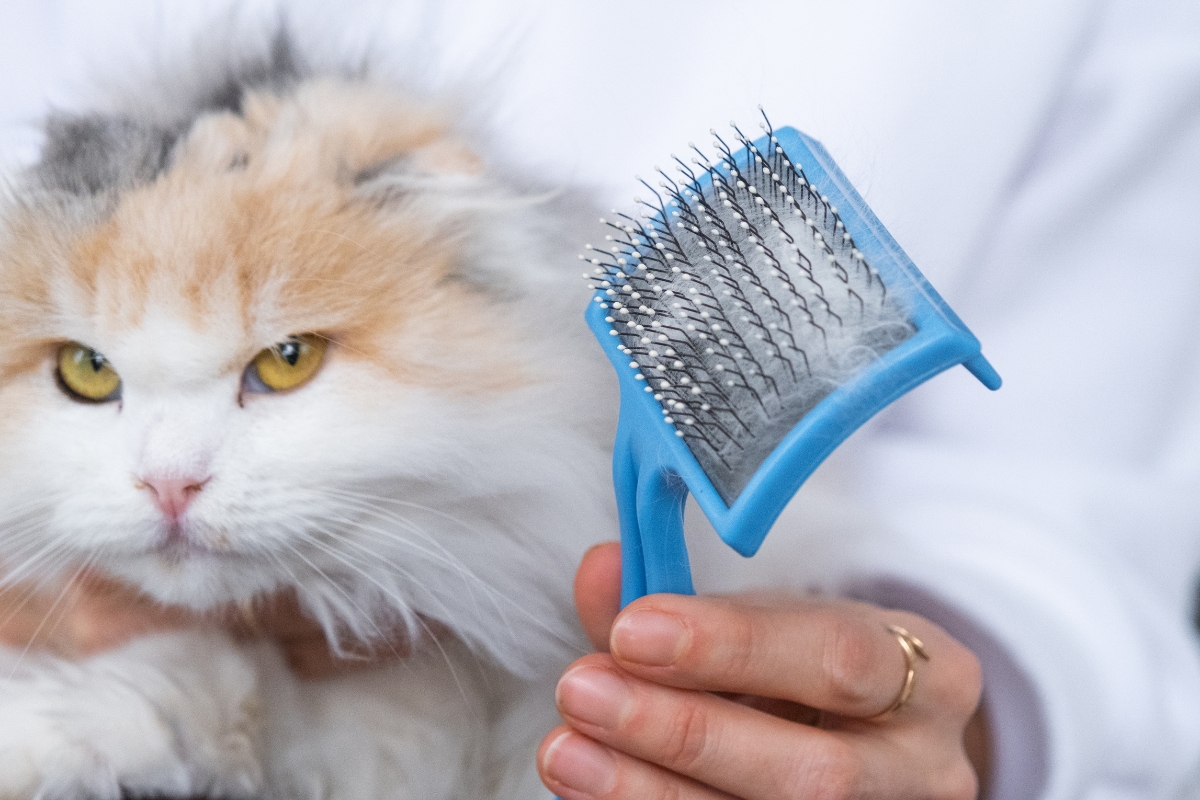
Food addresses swallowed hair from inside the digestive system. Brushing helps reduce the amount of loose fur swallowed in the first place.
Regular grooming can be particularly helpful for long-haired breeds and during heavy shedding seasons. Use a brush appropriate for the coat and avoid pulling aggressively at tangles.
While grooming, watch for:
- Bald or thinning areas
- Red or irritated skin
- Scabs or sores
- Dandruff
- Fleas or flea dirt
- Repeated licking of one area
These findings may suggest that something other than ordinary shedding is contributing to excessive grooming.
If you are unsure whether diet, shedding, or an underlying health concern is causing repeated episodes, visit our veterinary hospital for an examination.
When Is a Hairball More Than a Routine Problem?
Repeated gagging or vomiting should not automatically be blamed on a cat hairball. Respiratory problems, gastrointestinal disease, foreign material, and other conditions can sometimes produce signs that appear similar at home.
Schedule an examination if hairballs become noticeably more frequent or occur along with:
- Reduced appetite
- Weight loss
- Constipation or diarrhea
- Repeated vomiting
- Excessive grooming
- Reduced energy
- Changes in behavior
More urgent attention may be appropriate if your pet repeatedly retches without producing anything, cannot keep food or water down, appears painful or very weak, or has difficulty breathing.
A large accumulation of swallowed material can occasionally contribute to gastrointestinal obstruction. Because obstruction can become serious, persistent vomiting or retching should not simply be managed by changing food at home.
Give a New Food Time to Settle
Avoid suddenly replacing your pet’s regular food unless a veterinarian specifically recommends doing so.
A gradual transition over several days can help the digestive system adjust. During the change, watch appetite, stool consistency, vomiting, energy level, and acceptance of the new diet.
If your pet refuses food, develops persistent digestive problems, or experiences more frequent hairballs, contact your veterinarian rather than continuing to experiment with different formulas.
Effective cat hairball control usually works better when nutrition, hydration, grooming, and overall health are considered together.
Make Hairball Management Part of Preventive Care
Choosing food for hairball management involves more than picking a package labeled for hairballs. The feeding plan should support digestion, hydration, healthy body condition, and appropriate nutrition. Regular brushing can further reduce the amount of loose fur swallowed during grooming.
If recurring hairballs have you questioning what to feed or whether another problem could be involved, Haw Creek Animal Hospital can help. Pet parents in Asheville can schedule an examination at our animal hospital for veterinary care, preventive support, and practical dietary guidance based on their companion’s age, coat, health, and daily routine. Addressing the whole picture can help replace trial-and-error feeding with a clearer plan for long-term feline wellness.
FAQs:
Q1. How often is it normal for a feline to have a hairball?
Ans. An occasional hairball can occur, particularly during periods of heavy shedding. There is no single frequency considered normal for every pet. A noticeable increase or accompanying health changes should be discussed with a veterinarian.
Q2. Does hairball-control food actually work?
Ans. Hairball diets may help some cats because fiber and other nutritional features can support the movement of swallowed fur through the digestive tract. Results vary between individuals. Persistent episodes may indicate another contributing problem that requires evaluation.
Q3. Can wet food help reduce hairballs?
Ans. Wet food provides additional dietary moisture, which may support hydration and digestive function. However, moisture alone cannot prevent every cat hairball. Fiber intake, grooming habits, coat type, and underlying health also matter.
Q4. How long does hairball-control food take to work?
Ans. There is no universal timeline. Shedding, coat type, digestion, grooming behavior, and the food itself can affect the response. If frequent episodes continue despite dietary changes, a veterinary examination can help determine whether another issue is involved.
Q5. Should I give my pet a hairball remedy or supplement?
Ans. Do not assume an over-the-counter remedy is appropriate simply because it is marketed for hairballs. Discuss supplements and remedies with your veterinarian first, especially if your pet takes medication or has an existing medical condition.
Q6. When should frequent hairballs be checked by a veterinarian?
Ans. Arrange an examination when episodes become frequent or are accompanied by appetite loss, weight changes, constipation, diarrhea, vomiting, excessive grooming, or lethargy. Repeated unproductive retching, significant weakness, pain, or breathing difficulty may require prompt attention.